Traditional marketing and Digital marketing are two different marketing methods, allowing businesses to promote their services and products. Traditional marketing makes use of conventional channels like newspapers, TV, radio, direct mail, outdoor billboards, posters, magazines, text messages and voice calls, etc. to promote products and services to each potential customers; while digital marketing is a modern marketing strategy that uses digital channels like search engines, social media platforms, emails, video sharing platforms, affiliate marketing, influencer marketing, etc. to promote products and services and engage with target customers.
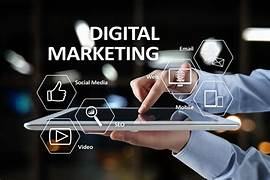
Digital marketing is the practice of promoting brands, products, and services through digital channels and technologies, such as web, email, and social media, in order to engage target audiences.
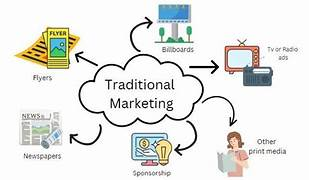
Traditional marketing encompasses the use of conventional techniques to promote products or services through offline platforms like print, broadcast, direct mail, and outdoor advertising.
Key Differences Between Traditional & Digital Marketing
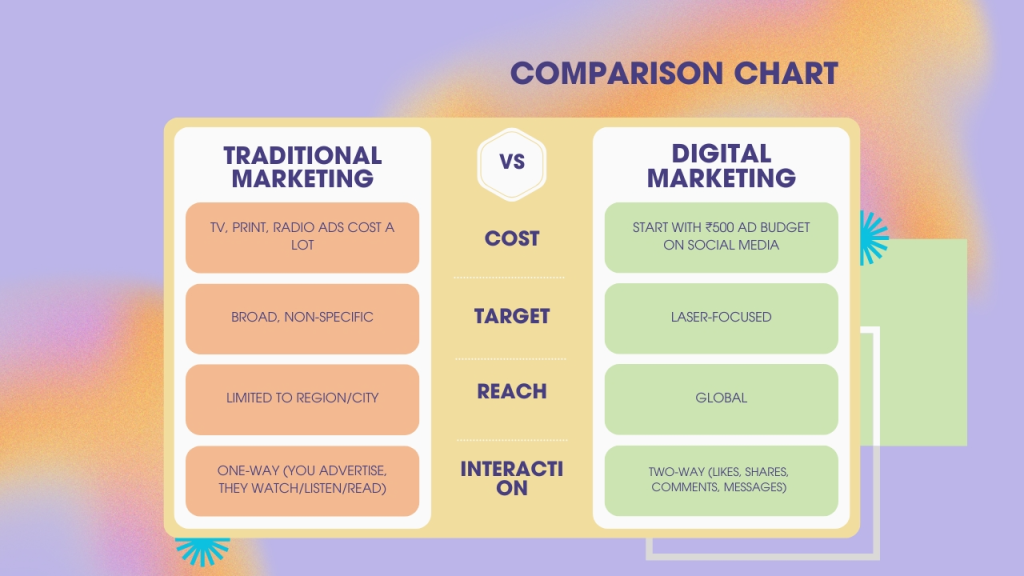
While both traditional and digital marketing aim to connect with customers, their methods, reach, cost, and impact vary dramatically.
Why Traditional marketing still works?
While digital is booming, traditional marketing remains powerful in certain contexts. For example:
- Rural or semi-urban areas where internet penetration is low.
- Older age groups who still rely on newspapers or TV for information.
- Real-world events like exhibitions or product launches where physical presence matters.
Example:
A local jewelry store advertising during a popular regional TV show or putting up a full-page ad in a wedding magazine this helps build credibility and connect with people emotionally.
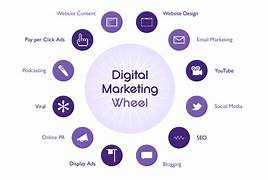
Common Digital Marketing Channels:
- Search Engine Optimization (SEO): Ranking your website on Google to attract organic traffic.
- Pay-Per-Click (PPC) Ads: Paid ads on Google, Facebook, Instagram, etc., where you pay only when someone clicks.
- Social Media Marketing: Promoting your brand via platforms like Instagram, LinkedIn, YouTube, and Facebook.
- Email Marketing: Sending personalized emails for promotions, nurturing, or retention.
- Content Marketing: Blogs, videos, infographics, and eBooks that provide value and build trust.
- Affiliate & Influencer Marketing: Collaborating with influencers or partners to reach specific audiences.
Why It’s So Popular:
- Smartphones are everywhere.
- People spend hours daily scrolling, searching, or streaming.
- It’s easy to launch, test, and scale campaigns with a limited budget.
Example:
A startup launching a new skincare brand runs Instagram Reels, Google Ads, and sends weekly email tips all driving traffic to their website and boosting sales through an automated funnel.
Digital marketing doesn’t just advertise it builds communities, drives engagement, and allows even small brands to go global overnight.
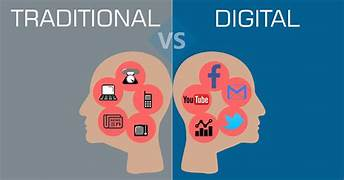
Here’s a clear comparison of Traditional Marketing vs Digital Marketing so you can see the differences at a glance:
| Aspect | Traditional Marketing | Digital Marketing |
| Medium | Offline channels like TV, radio, newspapers, magazines, billboards, flyers | Online channels like social media, websites, email, search engines, apps |
| Reach | Local or regional (unless it’s expensive national TV/radio) | Global reach, accessible anywhere with internet |
| Cost | Usually high (printing, broadcasting, physical ads) | Can be low to high depending on the platform and strategy |
| Targeting | Broad audience; limited ability to target specific demographics | Highly targeted based on age, interests, behavior, location |
| Interactivity | One-way communication (brand to audience) | Two-way communication (brands can engage directly with customers) |
| Measurability | Difficult to track exact results | Easy to measure using analytics (clicks, views, conversions) |
| Speed | Takes time to design, print, and distribute | Instant setup and publishing possible |
| Examples | TV commercials, radio jingles, newspaper ads, billboards, brochures | Google ads, social media posts, email campaigns, influencer marketing |
| Flexibility | Hard to change once launched | Easy to edit or adjust in real-time |
| Customer Engagement | Mostly passive consumption of ads | Active engagement through comments, likes, shares, and messages |
Conclusion
Marketing is no longer about choosing between old-school charm and new-age tech it’s about knowing what works best for your audience, your goals, and your budget.
Traditional marketing brings trust, emotion, and broad visibility. It’s great when you want to make an impression that lasts especially offline. On the other hand, digital marketing is your go-to if you want control, scalability, precise targeting, and measurable ROI all at your fingertips.
But here’s the truth: It’s not a battle. It’s a balance.
Conclusion
The most successful brands don’t limit themselves to one side. They combine traditional’s credibility with digital’s agility to create integrated marketing strategies that speak to customers at every stage of their journey whether they’re flipping through a magazine or scrolling through their phone.
So, if you’re a business owner, marketer, or aspiring creator start by asking yourself:
- Where is my audience right now?
- What message do I want to deliver?
- And how can I be present both online and offline in a way that builds real trust?
Because when strategy meets the right platform, marketing becomes more than promotion it becomes connection.